Let the light change life

Plastic optical fiber (POF) has a reputation problem in the fiber industry. High loss, poor temperature tolerance, short transmission distance — sounds like the "cheap stuff."
But from another angle, POF might be the most misunderstood fiber category.
POF uses PMMA for the core and fluorinated polymer for the cladding. Compared to quartz fiber, loss is several orders of magnitude higher, temperature tolerance typically doesn't exceed 85°C, and transmission distance is generally limited to within 100 meters.
These limitations are inherent to the material itself. So if your application needs long distance, high temperature, or low loss, POF is genuinely not the right choice.
Large core, easy to install. Core diameter is typically 1mm, with a core-to-cladding ratio as high as 96%. Alignment tolerances are relaxed — a slightly dirty or offset end face still transmits light. Connectors can be inexpensive plastic parts. No fusion splicer needed — a blade and a connector will do.
Flexible, bend-resistant. POF is very flexible with a small bend radius, and it tolerates repeated bending without breaking. In automotive interiors, robot joints, and mobile devices where frequent bending is required, this is a real advantage.
Low cost. Material and processing costs are far below quartz fiber. For applications that don't need high performance, using quartz fiber is simply overkill.
Automotive networks. In-vehicle networks don't need high bandwidth, but they do need EMI immunity, light weight, and controlled cost. POF fits all three.
Industrial sensing. Short-distance photoelectric sensing, position detection, liquid level detection — POF pairs with simple light sources and detectors. Low cost, easy installation.
Illumination and decoration. Short-distance light guiding, decorative lighting, display case lighting. POF is flexible, safe, and low-cost.
Consumer electronics and appliances. Fiber connections in audio systems, TVs, and game consoles — high volume, cost-sensitive.
Hecho Technology's plastic optical fiber products are primarily used in medical applications, specifically disposable endoscopes. Single-use, cost-controlled, and eliminating cross-infection at the source — this is exactly where POF's strengths align best.
Related products include:
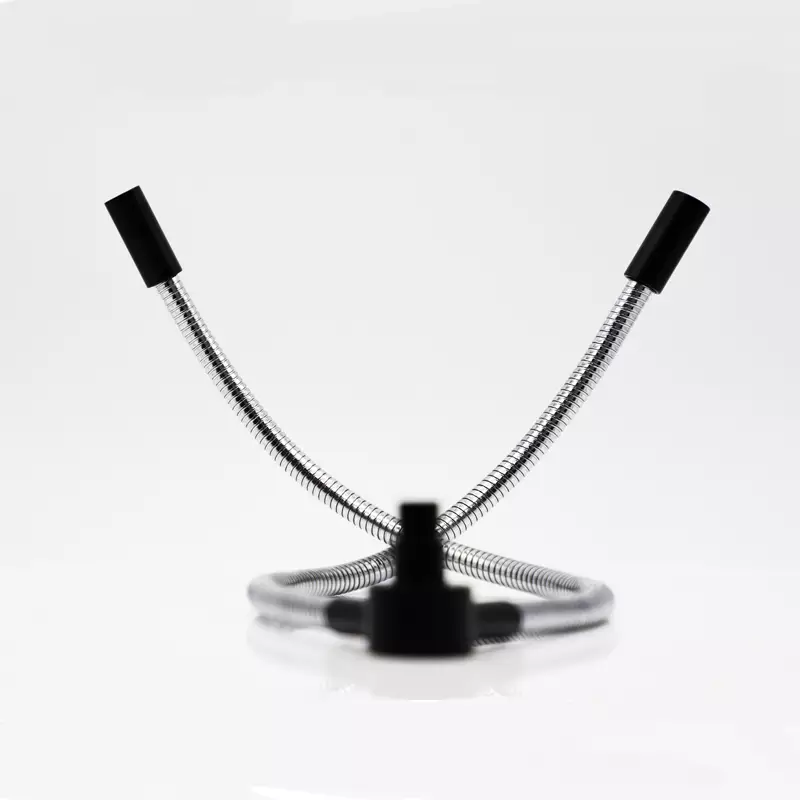
Dual-Tube Fiber Optic Light Guide — supports GOF, Silica, and PMMA materials. Product page
Customized Optical Fiber — covering fNIRS near-infrared fiber bundles, ring fiber, high-temperature fiber, and more, with custom options available. Product page
Different fiber materials solve different problems. Choose the right material for the right application — there's no "low-end" material, only the wrong choice.
If you have questions about fiber selection, contact the Hecho technical team.


 IPv6 network supported
 English
 简体中文
简体中文