Let the light change life

A year ago, G.657.A2 specialty fiber cost $3 to $4 per kilometer.
Today, it‘s over $30.
That’s a 10x increase — and it‘s still in short supply. Orders are booked through 2028. Customers are putting down deposits just to secure production capacity. Major Chinese fiber manufacturers have shifted 30% to 40% of their capacity from standard telecom fiber to specialty fiber — and the gap still isn’t closed.
Everyone in industrial, medical, and research fiber optics is asking the same question: What happened?
This isn‘t a single-factor story. Three distinct sources of demand converged at the same time.
Driver 1: AI Data Centers

AI compute center construction is accelerating globally — the U.S., Europe, the Middle East, and Southeast Asia are all building at scale. These facilities require high-density cabling, high-speed interconnects, and large quantities of specialty fiber.
The numbers tell the story: global data center fiber optic cable demand grew 75.9% year-over-year in 2025, reaching 69.6 million fiber-kilometers. 2026 projections stand at 91.6 million fiber-kilometers.
CRU projects the global optical cable market will grow at about 6.6% CAGR over the next five years. But AI and data-center-related optical cable demand? 32.6% CAGR — roughly five times the overall market. AI-related fiber demand is expected to jump from under 5% of total demand to 35%.
Driver 2: Fiber-Optic Drones
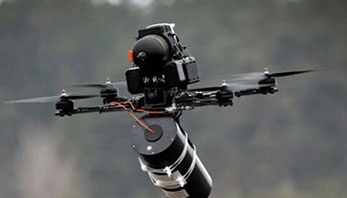
Fiber-optic drones are a newer variable in the demand equation. These drones use optical fibers for signal transmission — offering strong anti-interference and low-latency performance. Each drone consumes 20 to 50 kilometers of specialty fiber. And it’s single-use — replaced after every mission.
What this means: scaled drone deployment translates to tens of millions of kilometers of recurring demand. This isn‘t tied to the traditional telecom procurement cycle — it’s a persistent consumption stream.
Driver 3: Overseas Infrastructure Expansion
Beyond AI and drones, overseas infrastructure markets continue to expand. Fiber optic cable and transceiver export volumes posted double-digit year-over-year growth in the first quarter. Overseas demand is adding further pressure to an already tight domestic supply situation.
Let‘s do the math on G.657 series specialty fiber:
2026 global demand: 370 million fiber-kilometers
Effective production capacity in China: 200 to 210 million fiber-kilometers
The gap is over 46%.
That’s why prices jumped 10x. That‘s why orders are booked through 2028. Demand surged — and supply hasn’t caught up.
In the past, fiber price fluctuations were mostly driven by telecom carrier procurement cycles — up for a few years, down for a few years. Cyclical. Predictable.
This time is different.
The clearest evidence: two of the three major demand drivers didn‘t exist until recently.
AI data center demand comes from the global computing race. Fiber-optic drones come from expanding military and industrial applications. Both are still in rapid growth phases, with no visible ceiling in the near term. Overseas infrastructure is more traditional, but global digitalization continues to drive steady expansion.
Three demand streams, all pulling at once — and all sustained.
This suggests a structural shift. Specialty fiber may be transitioning from a cyclical industry to a growth industry.
This isn’t just a price spike — it‘s reshaping how the fiber industry operates.
In the past, fiber was largely a standardized product. Carrier procurement dictated specifications. Factories produced high volumes of identical products — low margin, commoditized.
But this demand surge is driven by high-end, customized requirements. AI data centers need high-bandwidth, low-loss fiber with tight bend tolerance. Drones require specific grades like G.657.A2. Industrial IoT and automotive fiber applications are further diversifying the market.
Fiber optics are moving from standardized products to customized solutions.
Hecho Technology has been in specialty fiber optics for nearly two decades, spanning plastic optical fiber, glass fiber, and quartz fiber — with a focus on industrial laser transmission, medical device integration, and scientific research applications.
The shift from standardized products to high-end customization is where Hecho‘s strength lies. Unlike large-scale telecom fiber manufacturers, Hecho specializes in application-specific optical transmission solutions — whether for industrial sensing, medical laser delivery, or research applications. Customers often need a solution that fits precisely, not a generic product.
If you’re looking for a custom specialty fiber solution or have questions about current market trends, reach out to the Hecho technical team.


 IPv6 network supported
 English
 简体中文
简体中文